Pages

February 13, 2012

Pinellas County Extension Shines a Light on Energy Consumption

James Stevenson
Sr. Extension Specialist,
Pinellas Energy Efficiency Project


Through its Pinellas Energy Efficiency Project, Pinellas County Extension is promoting a new gadget that aims to get citizens more energy conscious and eco-friendly.

The Kill-A-Watt™ Energy Monitor is a simple tool used to see how much energy the devices in a home are actually using, whether they are on or off. Users simply plug the monitor into an outlet, plug an appliance into the monitor, follow The Kill-A-Watt’s instructions and watch it work. The monitor measures various aspects of electrical consumption, from voltage of an outlet to watts and kilowatt hours. Users can find out exactly how much energy and money is being consumed by most of their household electronics.

Pinellas County Extension and the Pinellas Public Library Cooperative have come together to make these Kill-A-Watt monitors available for check-out at their libraries to make the assessment of personal energy consumption even easier. Stop by your local library to check out a monitor and discover how much energy could possibly be saved in your home.

Extension specialists will also be holding upcoming classes at select libraries to further explain how the monitors work and to give easy tips to make a home more energy efficient in an effort to decrease electric bills and increase environmental friendliness.

To sign up for a class, visit pinellascountyextension.org and click on the date of the class you would like to attend. The class is free and registration is very easy.

It is estimated that Americans waste about $5 BILLION dollars on stand-by energy loss. Stand-by energy is the energy consumed by electronic devices when they are “off.” During the past decade, we have seen a tremendous amount of devices that consume energy when not in use. Just think of all the portable electronics that require charging that most of us own today. Those chargers and power adaptors (or “wall warts”) may be consuming electricity even when the device is not attached! Try to look for the little green or red lights lit up on the electronics throughout the house—even when turned off—and then ask yourself how those little lights are being powered. By sheer volume, those small amounts of wasted energy certainly add up.

The Lawrence Berkley National Laboratory, a U.S. Department of Energy National Laboratory operated by the University of California tested hundreds of electronic devices that were turned off to search for phantom energy loss. Their results were surprising. A full list of their results can be found here but some of the most shocking came from seemingly innocuous sources. Of 52 desktop computers tested, standby power use ranged between 0 and 9.21 watts when “off.” In sleep mode the energy use was between 1.1 and 83.3 watts/hour, averaging 21.13 watts/hour in sleep mode. Set-top digital cable boxes with DVR consumed around 44 watts/hour whether on, off, recording or not. Similarly, wall-charger units are thought to consume as much as 65% of their capacity even when not charging a device.

By using a Kill-a-Watt energy monitor you can discover what devices in your home might be consuming energy when not in use. The monitor is plugged into an outlet, and then the device you want to test is plugged into the monitor. By selecting the “WATT” switch on the device, a screen displays what that device is using at that minute. You can leave the device (let’s say a DVD player) plugged into the monitor for 24 hours, and get an idea of how much the DVD uses when in use and in stand-by mode by selecting the “kW” switch. A DVD may consume 13 watts of electricity in stand-by mode. That may only be pennies a day, but imagine how many DVD players exist in Pinellas County, in Florida, and in America.

UF’s state specialist for housing and community development, Dr. Randy Cantrell, recently installed a similar device in his home in order to expose his family to various practices that consumed electricity. He cautions everyone to keep an open mind when using such devices because although his wife was intrigued, she preferred to blow dry her hair without guilt and interruption of viewing how much electricity she was using. The point is that small steps should be taken forward and backward in your pursuit of improving the efficiency of your home. Although the power monitor is no longer used in his household, all members are much more aware of the information that it revealed to them while it was in use.

Solutions to this “phantom energy” loss may be to simply unplug devices when not in use. If you do not use the automatic brew feature of your coffee maker, unplug it! That little clock is wasting energy. It is important to use computer settings to completely shut down after a period of inactivity. And the “peripherals” that accompany PCs and TVs; the printers, speakers, game consoles, etc., together consume a lot of your watts. A “smart strip” power strip can take the guess-work out of this energy loss. Smart strips detect when a device (TV, PC) goes into stand-by mode and will completely power off the peripherals. Learn about the Kill-a-Watt, smart strips and more at one of our classes.

We hope to see you at one of our upcoming classes, but if you decide to check a monitor out on your own, we’d love to hear about your experience. Email jstevenson@pinellascounty.org and let us know what you discovered!


Upcoming Kill-a-Watt Classes 2012:
Tuesday March 13, 7pm-8pm, Dunedin Public Library
Saturday March 31, 1:30pm-2:30pm, Clearwater East Branch Library
Thursday April 12, 6:30pm-7:30pm, Safety Harbor Public Library
Thursday April 26, 1:30pm-2:30pm, Oldsmar Public Library
Monday May 7, 1:00pm – 2:00pm, St. Pete Beach Public Library


References:

Lawrence Berkeley National Laboratory/Standby Power

Randall Cantrell, PhD, Housing and Community Development, Assistant Professor, University of Florida Family Youth and Community Sciences

Florida Energy Systems Consortium, Whole-House Systems Approach to Energy Efficiency

February 6, 2012

There May be a Robot in Your Junk Drawer

Keri Hannukainen
4-H Youth Mentor

As many of you may be aware, Governor Rick Scott strongly advocates the STEM fields as vital sources of economic growth for the country. The exponential growth in the science industries in the past few years has opened up unprecedented opportunities in both job markets and scientific advancement. 4-H is ahead of this curve and has been pursing project areas in the sciences for many years now.

This year, the 4-H program has expanded another branch of study for the 4-H curriculum: robotics. Prompted by the declining trend in our nation’s science, engineer, mathematics, and technology workforce, 4-H has developed a comprehensive robotics program as part of the National 4-H’s goal to engage one million new young people in science by the year 2013. In order to achieve this goal, 4-H Robotics is currently being delivered through 4-H clubs, camps, school enrichment, and after-school programs nationwide. Using this curriculum, 4-H members will engage in service learning and community service projects, develop leadership and citizenship skills, and develop numerous life skills taught in 4-H clubs nationwide.

The Junk Drawer Robotics track is a three-level series that encompasses the spirit of engineering and the thirst for knowledge that drives 4-H members towards success. According to the national 4-H website, “in each module of this track, youth will learn about a different aspect of robotics and design and build a robot using what they have learned. This track emphasizes developing knowledge and…skills as participating youth design and build their own robots.” In order to keep track of their achievements and receive additional information, the “youth will use their Robotics Notebook to record their learning experiences, robotic designs and the data from their investigations.”

The activities and their complexities in the Junk Drawer Series vary according to the level of the book. As the series progresses, the activities naturally become more complicated as they build upon the knowledge learned throughout the series. None of the activities, however, require the use of a computer. The materials used in this program are mostly common household items such as rubber bands and paperclips. This simplicity of these parts fosters the ingenuity of the 4-H members, challenging them to innovate and to explore in order to create fantastic products.

At Level One: Give Robots a Hand, the youth learn how to think like engineers. The youth learn to communicate the same idea through various methods and how robots manipulate objects. Using all of this knowledge, the youth then construct a robotic arm.

The activities in Level Two: Robots on the Move teach the youth about friction, electric circuits, electromagnetism, gears, and buoyancy. The 4-H members will then construct an underwater ROV using the skills they have learned throughout the book. Most importantly, however, the youth will learn about the constraints of a budget. The youth will be asked to create a robot as efficiently as possible—a task that all engineers must do.

The activities in the Level Three: Mechatronics teach the youth about different types of circuits, sensors, binary, logic, components, and processors. In addition, the youth will learn the basic elements of programming and instructions for robotic computer control. As their final activity, the youth will design and construct their final robot.

On the 4-H.org web site, there is a sample activity from the Level Two: Robots on the Move workbook. This activity teaches 4-H members how to construct a Clipmobile. The following is a description of the activity from 4-H.org:

In this activity, you learn about friction, about the engineering design
process and how understanding friction and design can help you build more
efficient machines. Like all the modules in Junk Drawer Robotics, there are
three types of activities; (1) To Learn activities where you learn about how
things work - the science behind robotics, (2) a To Do activity where you learn
about engineering and design their own solution to the Clipmobile Challenge, and
(3) a To Make activity where you apply technology as you actually build and test
your design.

Since many of the activities require multiple participants, it is highly recommended that this curriculum be used as a Club project book. Average Joe’s and French Villas 4-H Club will be using the Junk Drawer Robotics series as its club project book this year. If you are interested in using the Junk Drawer Robotics series, please contact the 4-H Extension Office.

This exciting and challenging series tests the ingenuity of the youth, forcing them to persevere in order to succeed. Unlike other do-it-yourself kits, the Junk Drawer Robotics series challenges 4-H members to innovate and explore, instead of merely following instructions. Moreover, this series places the focus upon science and engineering in order to engage 4-H members in these rapidly expanding and desperately needed job fields.

January 30, 2012

Healthy Habits for a Healthy Heart!


Jennie Guan, Dietetic Intern,
Bay Pines VA Healthcare System


February is American Heart Month. Heart disease is the number one killer for both men and women in the United States. While there are many risk factors, what you eat and how physically active you are can pay big dividends when it comes to taking care of your heart. Eating more fruits and vegetables, lowering saturated and trans fat intake, decreasing sodium levels, and keeping a healthy weight can help you on your journey to taking good care of your heart.

Most fruits and vegetables are low in calories and high in vitamins, minerals, and fiber, making them heart healthy. Eating a variety of fruits and vegetables may help you control your weight and your blood pressure. A diet high in fiber can lower your risk of heart disease. Vegetables, fruits and whole-grain foods contain fiber that can help lower your blood cholesterol and help you feel full, which may help you manage your weight.

Make smart choices when it comes to fats. Choose heart healthy fats that are unsaturated in small amounts. Fats like olive and canola oils are good choices for your heart. Some of the best foods for lowering cholesterol include oatmeal, fatty fish like salmon and trout, walnuts (and other nuts), olive oil, and foods fortified with sterols or stanols. Spreads like Benecol and Promise Activ are examples of these products.

Unhealthy cholesterol levels increase your risk for heart disease, so keeping yours low is key to a healthier heart. Try to limit the saturated and trans fats, two fats that raise your blood cholesterol. Most animal foods are high in saturated fat, so choose lean meats and low fat dairy products. Reduce the amount of solid fats like butter, margarine, or shortening that you add to food when cooking. Read those labels when buying products to help you find the trans fat in a product. And pay close attention to the amount of fast foods you eat as they can be high in trans fats too.

Sodium can be another deal breaker. Consuming high amounts of sodium can contribute to high blood pressure, which is a major risk factor for cardiovascular disease. The American Heart Association recommends no more than about a teaspoon of salt a day for an adult. Reducing the sodium in your food is a big part of a heart-healthy diet. Since salt is sodium chloride, try to limit the amount you use in the foods you prepare. Most of the sodium in our diet is hidden in processed foods like canned foods, processed meats, instant foods, and many frozen convenience foods, so pay attention to what you put in your shopping cart. Restaurant meals are usually high in sodium as well. If you plan to eat out, try to keep sodium low at other meals that day.

Don’t forget the physical activity. Physical activity is recommended to promote heart health, maintain weight or promote gradual weight loss. Thirty to 60 minutes of exercise is what we need on most days. Do what you enjoy to help you get active. It could be a brisk walk, playing with the children, gardening or dancing. If you’re having trouble exercising 30 to 60 minutes, break it up into small 10 to 15 minute blocks of time. Always be sure to check with your healthcare provider first.

The Therapeutic Lifestyle Changes (TLC) diet and Dietary Approaches to Stop Hypertension (DASH) diet are good at promoting heart health. For further information about each diet, you can go to the websites.

The Therapeutic Lifestyle Changes (TLC) diet is recommended by the National Cholesterol Education Program of the U.S. National Institutes of Health. The TLC Diet is a low saturated fat, low cholesterol diet that will help to reduce your blood cholesterol level thereby decreasing your chance of developing heart disease. http://www.nhlbi.nih.gov/cgi-bin/chd/step2intro.cgi

The DASH diet is a lifelong approach to healthy eating that's designed to help treat or prevent high blood pressure (hypertension). http://dashdiet.org/

To decrease your risk of heart disease, your best and easiest way is to consume a diet rich in fruits, vegetables, whole grains, and fat free or low fat dairy foods as well as lean protein. Include some physical activity too!

Participate in National Wear Red Day—Everyone (men too) can support the fight against heart disease in women by wearing red on February 3, 2012. Click here to learn more about Wear Red Day!


The American Heart Association: Diet and Lifestyle Recommendations: Revision 2006

January 23, 2012

The New Kid on the Block

Lara Miller


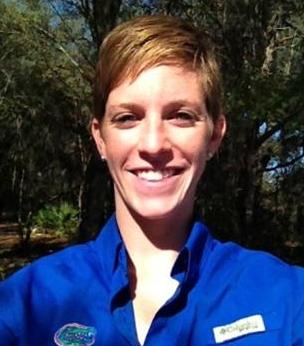
I just started my dream job at the Brooker Creek Preserve and I am honored to be joining the Pinellas County Extension team as the new Natural Resource Agent! Pinellas County already feels like home and I could not be more grateful to work at the Preserve where I am constantly surrounded by its beauty.

Growing up in the small coastal town of Jupiter, FL I became fascinated by the environment that surrounded me. As my high school days approached, I was thrilled to discover I was accepted into the Jupiter Environmental Research and Field Studies Academy where my curiosity developed into a passion. After graduating from this four-year program, I attended the University of Florida where I continued my education about the natural world. Through a combined degree program I obtained a Bachelors degree in Natural Resource Conservation and a Masters degree in Forest Resources and Conservation with a focus on environmental education. Aside from academics, my hobbies revolve around sports and the outdoors; I make my fitness a priority and enjoy weekend camping adventures.


Brooker Creek Preserve is the largest natural area in the county, standing at an astounding 8,700 acres. The slightest elevation changes transform the land from dry pine flatwoods to flooded lands of cypress domes and swamps. Each ecosystem supports different types of wildlife from deer to otters and turkeys to water moccasins. The best part is there are trails that lead visitors through each of these ecosystems for an outdoor adventure this is as diverse as it is surprising. Furthermore, with the amazing support of our volunteers and the Friends of Brooker Creek, the Education Center and its state-of-the-art exhibits draws in thousands of visitors every year.


I like to think the best part about living is growing, and I know through my work with the volunteers, the county and the University of Florida, I will be able to go above and beyond in my role as a natural resource extension agent. I am eager to see how my skills and background can contribute to the Preserve and the educational programs which it offers.


Thank you and I look forward to meeting all of you when you come to visit Brooker Creek Preserve!

December 20, 2011

Dietary Supplements – Navigating the Unknown


Kimberly Andreola, Dietetic Intern at Bay Pines Veterans Administration
Health Care System


Every day we are being bombarded by messages from the media telling us what foods and supplements we need to stay healthy. It may be a “new miracle cure for cancer” or that essential ingredient that we need to “fight infections and boost the immune system”. The information can be confusing and leave you with lots of unanswered questions. To help you sort out the confusion and find helpful resources on the topic, read on.


What is a supplement?
Supplements contain one or more dietary ingredients such as vitamins, minerals, herbs or botanicals and are found in many different forms (usually pill, capsule, tablet or liquid form).  Supplements are not foods and are not food replacements – they are intended to “supplement” a healthy diet.


Dietary supplements are not intended to treat, diagnose, prevent or cure disease.   In some cases, supplements can even interact with your normal prescription medications, decreasing or altering the desired effects and rendering your medications ineffective or unsafe.  For example, the herbal supplement St. John’s Wort can speed the breakdown of many drugs including birth control pills, and antidepressants thereby reducing the drugs’ effectiveness.


In addition to these interactions, supplements may negatively interact with each other or cause undesired effects if consumed in excess of what your body needs.  Many foods are fortified with extra nutrients these days.  Supplementation beyond what is required along with intake of a normal diet and consumption of fortified foods could be overloading your body on certain nutrients. 


Should I consider using a supplement?
If you consume a varied diet rich in vegetables, fruit, whole grains, and lean proteins, you probably do not need to add supplements to your diet.  People who might consider supplementation include those who have been diagnosed with a deficiency disease or those for whom vitamin and mineral intake may be inadequate.  People at risk for inadequate intake of vitamins, minerals, carbohydrate, protein, or fat include: pregnant women, people who lack access to healthy foods, alcohol-dependent individuals, strict vegetarians and those with increased or altered nutritional needs related to a health condition (such as those people who have a medical condition that alters how their body absorbs or uses nutrients).


If you are currently using supplements or are considering adding one to your diet, discuss the following with your doctor or dietitian first:

  1. What are the potential health benefits of the product for me? What works for your best friend or family member, may not work for you and could even be harmful to your health. Eating a variety of nutritious foods is the best way to maintain health and prevent chronic disease.  
  2. How does this supplement fit into my total diet? If you don’t eat a nutritious variety of foods, some supplements might help you get adequate amounts of essential nutrients.  Supplements cannot take the place of a varied diet, though.  
  3. Does this product have any safety risks? Always know your supplement and its risks, including interactions with medications, before adding it to your diet.  The National Institute of Health (NIH) provides fact sheets on many of the common supplements summarizing benefits and risks.  The Food and Drug Association (FDA) also posts reports of adverse events as they occur and makes recommendations for certain products.  
  4. What is the proper dose to take?  The FDA monitors supplements once they have been placed on the market.  It is the manufacturers’ responsibility to recommend serving sizes and doses based on research. Discuss your need for each supplement with your doctor to determine what dose may be appropriate for you.
  5. How, when, and for how long should I take it?  Each of these questions should be discussed with your doctor.  The answers will vary by individual and by supplement.  
  6. Does this product seem too good to be true?  More than likely the answer is yes. Read your label, research the product on the NIH and FDA websites and talk to your doctor before initiating any supplement regimen.

It is important to keep in mind that no supplement will replace the benefits of eating real food.  To decrease your risk of disease and stay healthy, your best bet is to consume a diet rich in fruits, vegetables and whole grains as well as lean protein and low fat dairy foods.  If you find it difficult to consume everything your body needs or think you may need more of a certain nutrient for medical reasons, consult your doctor before purchasing and using a supplement.  Your doctor or dietitian can help you navigate the supplement aisles of the grocery store and determine what your individual needs might be. 


References:


National Institute of Health.  Dietary supplements: What you need to know. (2011, June 17). 

Federal Trade Commission. (2011, November). Dietary supplements.  


USFDA. (2011, October 06). Dietary supplements.


ADA (2009). Position of the american dietetic association: Nutrient supplementation. Journal of the American Dietetic Association, 109, 2073-2085.


National Center for Complementary and Alternative Medicine. (2011, November). St. john's wort.